Audio vs. Video: Why Visual Podcasts on YouTube Outperform Audio-Only in 2026
For over a decade, podcasting followed a predictable rule: plug in a microphone, export an MP3 file, upload it to an RSS feed, and you're done.
But as we move through 2026, the data shows a massive shift in how audiences consume content. Traditional audio-only shows are losing their absolute dominance. Today, YouTube has officially overtaken traditional audio directories to become the number one platform for podcast consumption globally.
Major hosting platforms have fully integrated video capabilities, and industry reports show that over 53% of regular listeners now actively prefer watchable podcasts. If you are still relying solely on audio, your show is effectively invisible to a massive chunk of the market.
Visual podcasts on YouTube are completely outperforming audio-only formats. Let's look at why it's happening and how creators are leveraging this shift.
1. YouTube is the New "Discovery Layer"
The single biggest flaw of traditional audio podcast platforms is discovery. Apple Podcasts and Spotify's audio tabs rely heavily on manual charts or highly specific keyword searches. If someone doesn't know your exact show name or topic, finding you is incredibly difficult.
YouTube operates differently. It is the world's second-largest search engine, powered by one of the most sophisticated recommendation algorithms on earth.
- Search Intent Optimization: Audiences routinely use YouTube to find answers, look up experts, or explore industry trends. When you optimize a video podcast title and description for search intent, your multi-camera episode can surface directly in front of someone actively looking for your expertise.
- The Homepage Boost: If a viewer watches a video related to your niche, YouTube's algorithm will proactively push your podcast thumbnail onto their homepage feed. Audio platforms simply don't have a mechanism that matches that kind of organic reach.
2. One Recording Session, Dozens of Micro-Content Assets
The modern creator economy relies heavily on short-form vertical video. Trying to promote an audio podcast on Instagram Reels, YouTube Shorts, or LinkedIn using a static waveform graphic (an audiogram) just doesn't work well anymore. Audiences scroll right past them.
When you record a high-definition video podcast, your full-length episode doubles as a content factory.
A single one-hour recording session can easily yield an entire month's worth of organic marketing assets. These short clips feel completely organic because they are rooted in authentic, unscripted studio conversations rather than forced promotional scripts. They act as micro-hooks that continuously drive traffic back to your main channel.
3. Higher Engagement and Human Connection
Podcasting has always been celebrated for creating a strong "parasocial connection"—the feeling that the listener truly knows the host. Video compounds this effect dramatically.
Seeing a host's physical gestures, facial expressions, and the layout of their studio space creates immediate intimacy and trust. According to a recent Podbean industry report, people who watch video podcasts consume about 1.5× more content than audio-only listeners, and 44% of video podcast viewers give the content their undivided attention without multitasking.
When you put a face to the voice, your audience becomes significantly more loyal. They don't just listen to the topic; they subscribe to you.
The 2026 Standard: Avoid the "Static Camera" Trap
Simply pointing a single, cheap webcam at your face while you sit at a desk won't cut it anymore. Audiences are conditioned to expect professional visual pacing. If a video frame doesn't change or offer visual variety, the human brain loses interest fast.
To build an authoritative digital presence that commands attention, your production setup needs to look intentional:
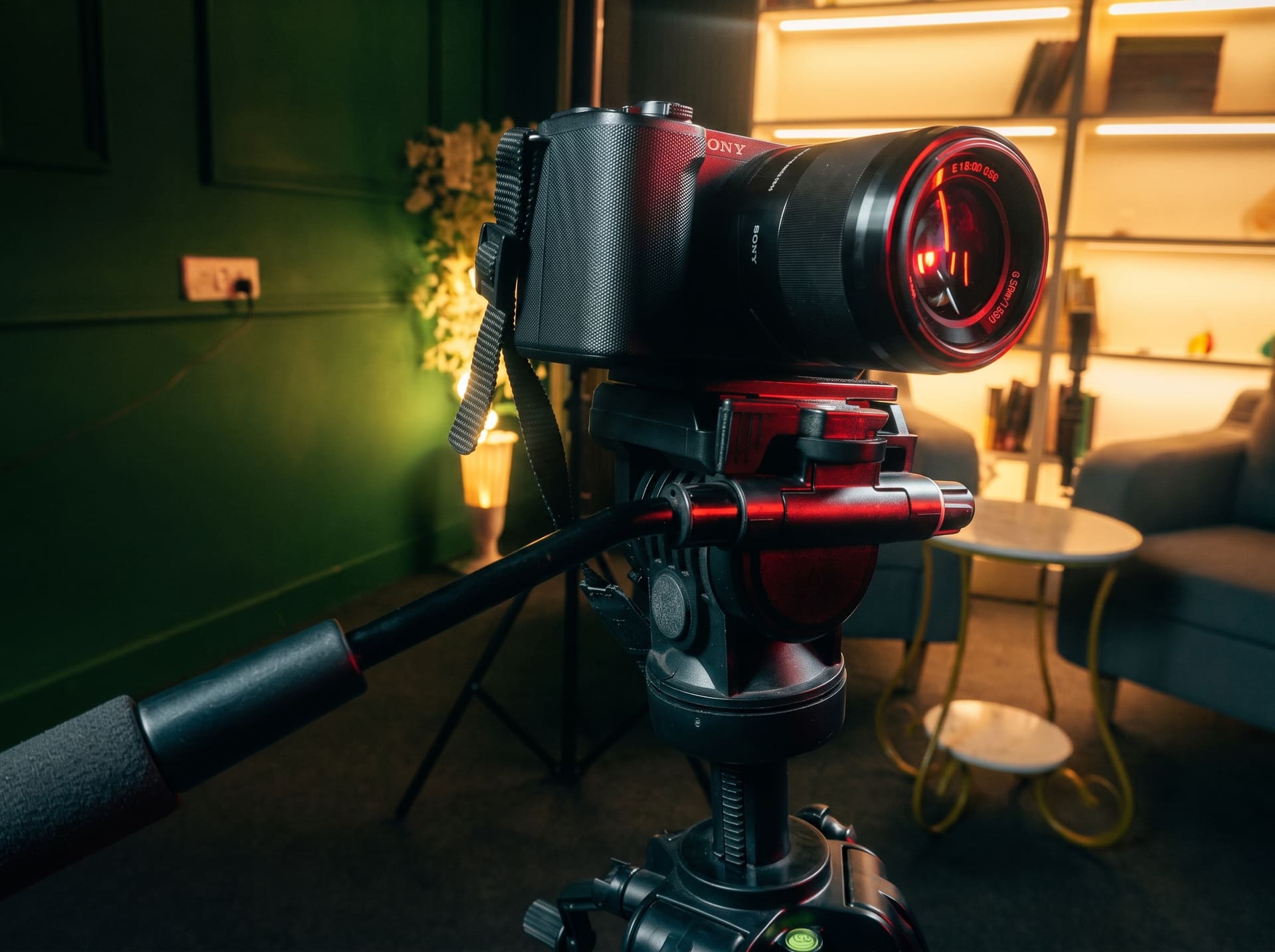
- Multi-Camera Setups: Seamlessly cutting between a wide studio shot, a dedicated angle for the host, and a dedicated angle for the guest keeps the video visually dynamic.
- Studio-Grade Lighting: Clean, directional lighting separate from harsh overhead fixtures elevates the entire aesthetic, making a business or personal brand look premium.
- Aesthetic Visual Branding: Customized backdrops, clean furniture, and strategic neon or ambient lighting establish a distinct visual identity that makes a thumbnail unmissable.
The Takeaway: You don't need to manage the immense technical stress of cameras, multi-track switchers, and lighting design on your own. Let a professional studio handle the production logistics so you can focus entirely on having an impactful conversation.